Product Design
Dental Clinic Management - Web Portal
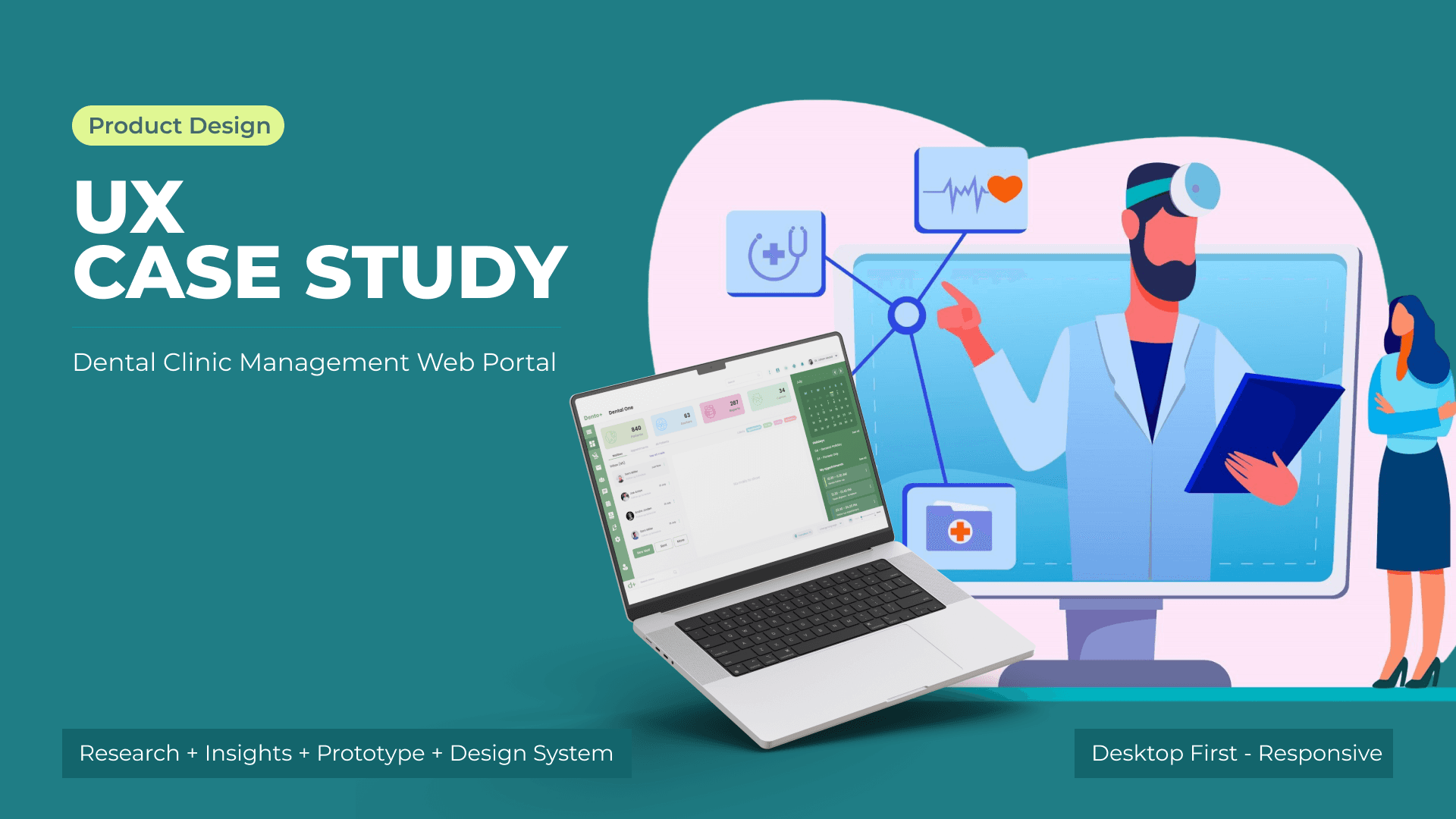
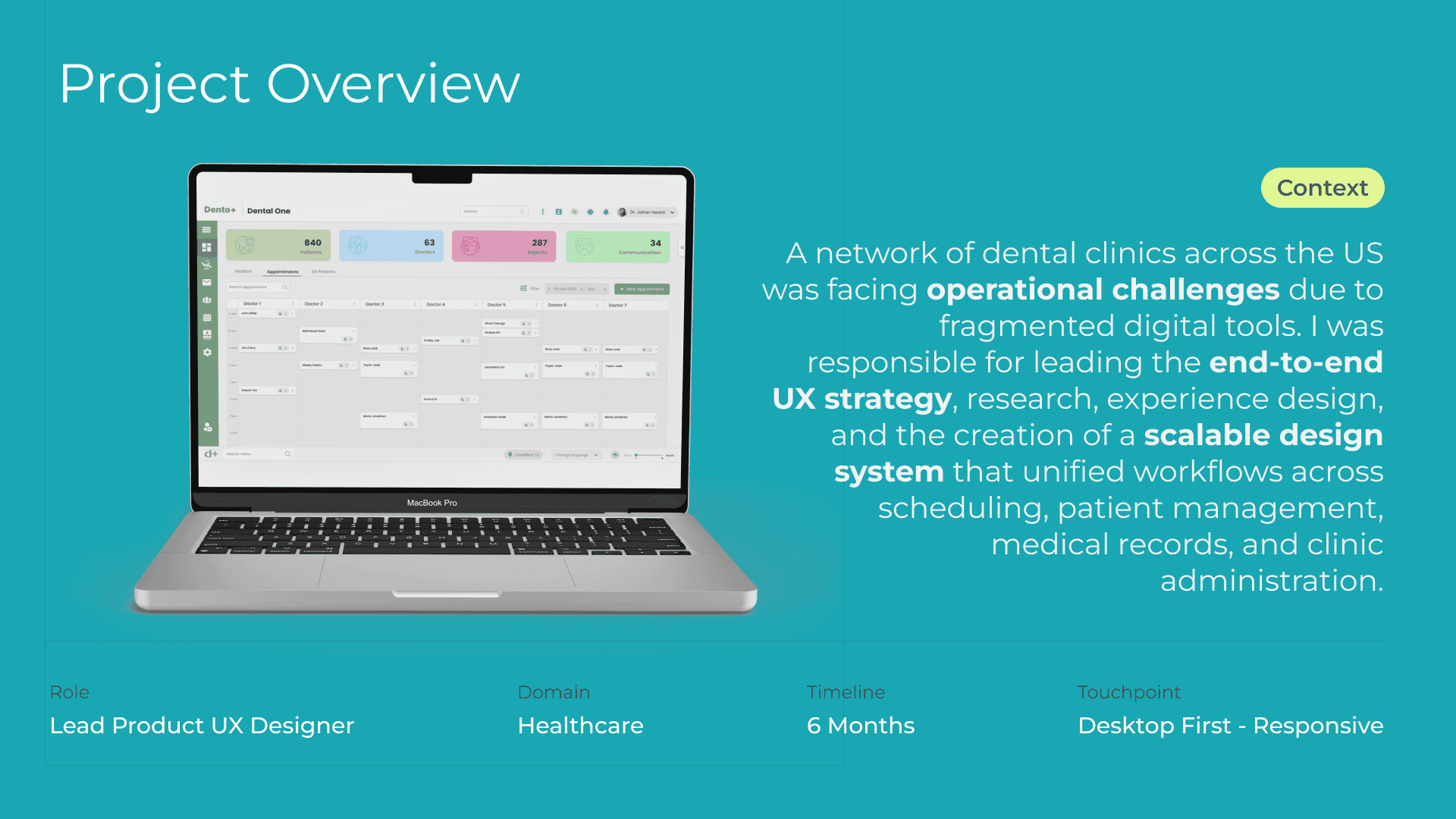
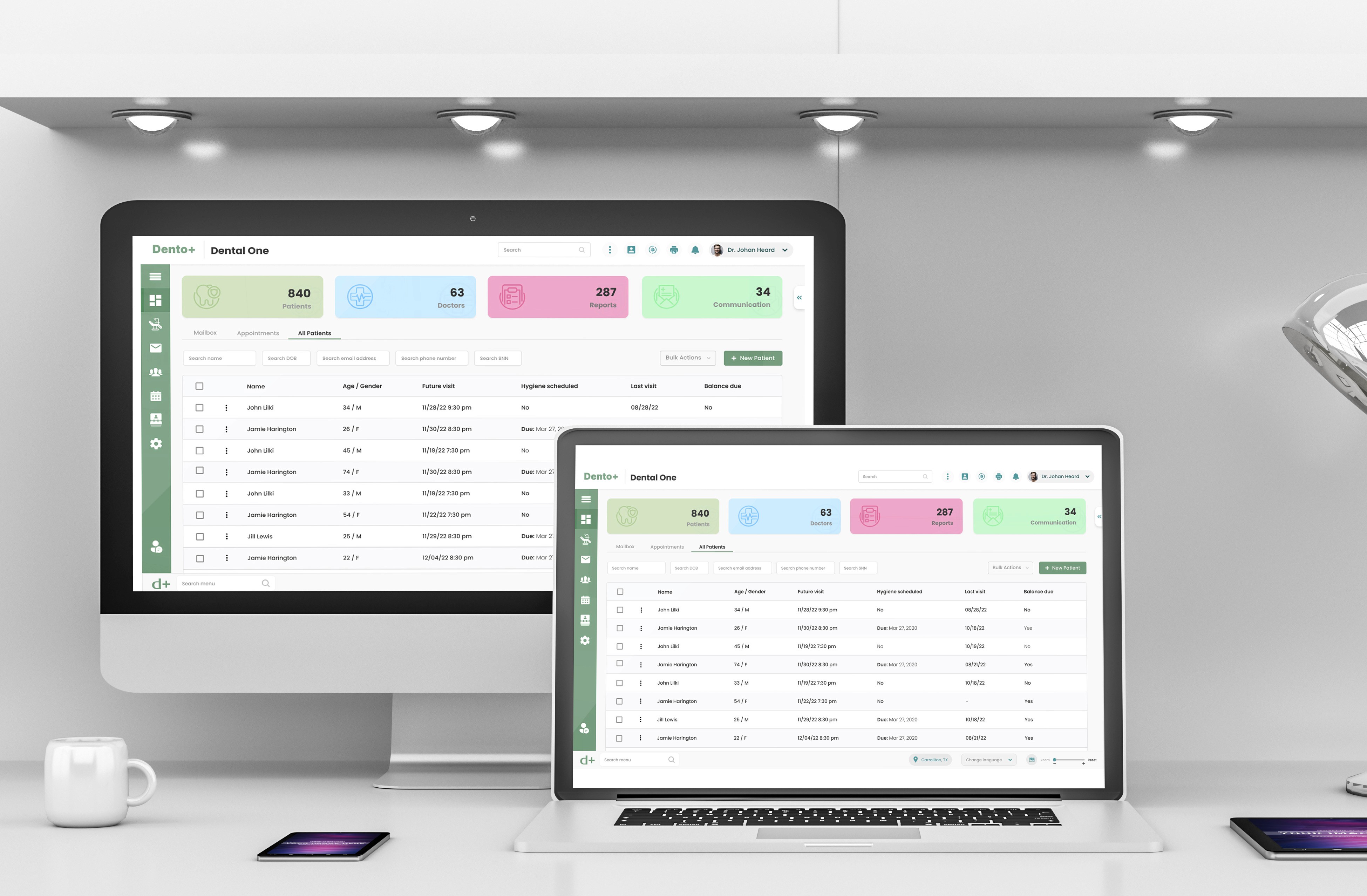
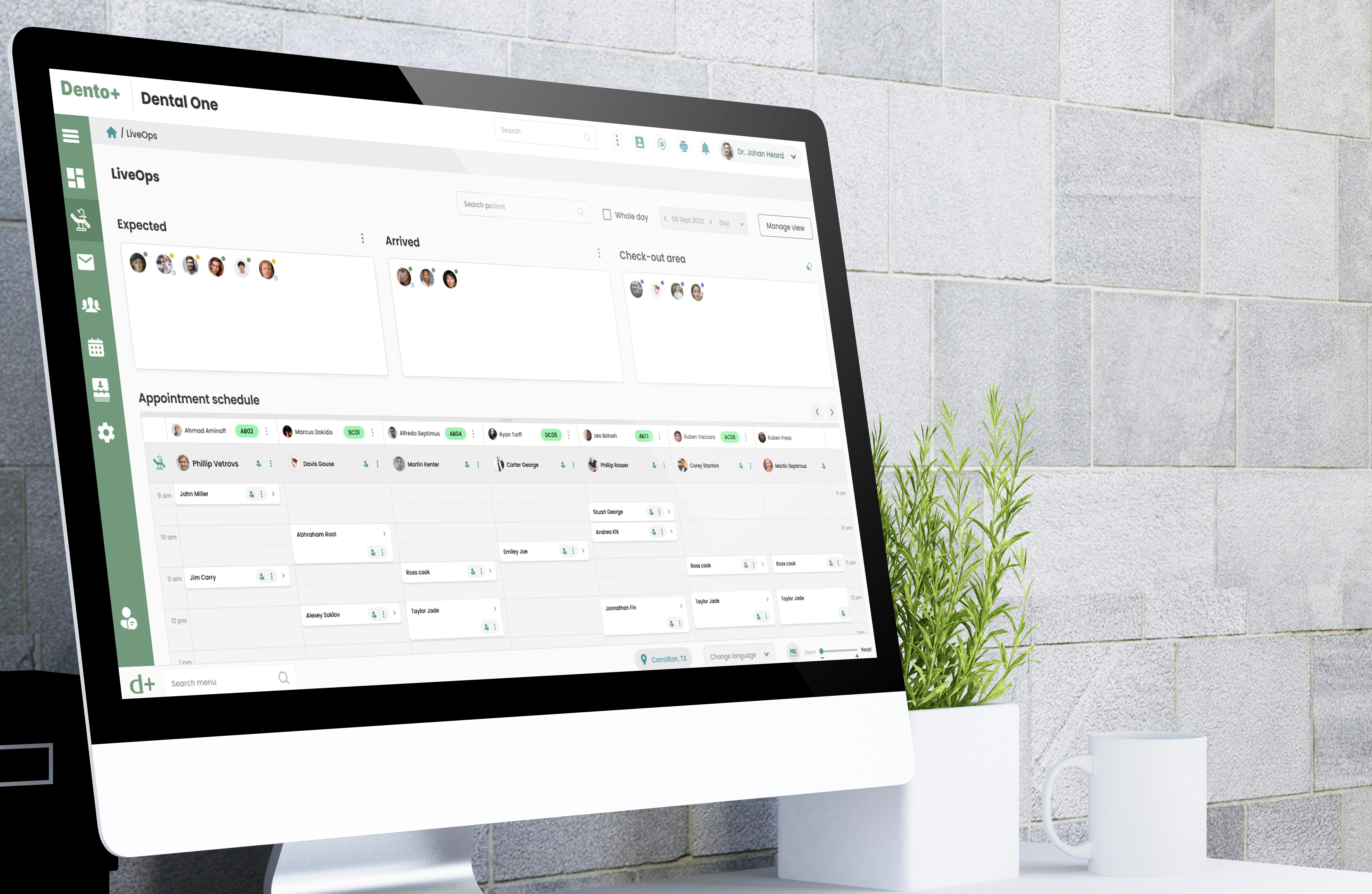
Designed a comprehensive web application for a network of dental clinics across the US, streamlining hospital management, doctor appointments, patient records, and medical data. The project included the creation and management of a robust design system to ensure consistency, accessibility, and scalability.
Year :
2023
Industry :
Healthcare
Client :
US Based Healthcare Client
Project Duration :
26 weeks
Problem Statement :
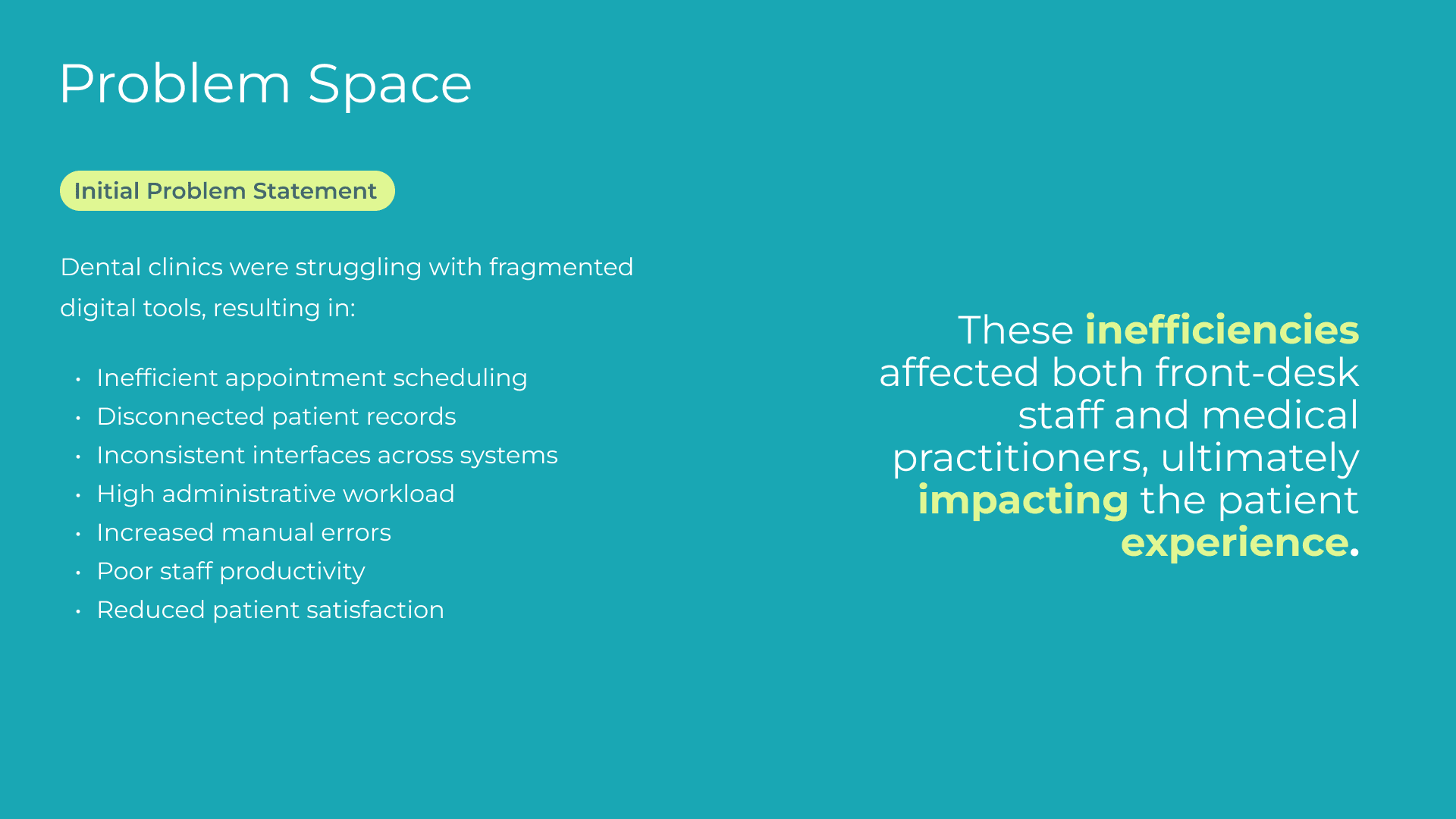
Dental clinics were struggling with fragmented digital tools, leading to inefficient appointment scheduling, cumbersome patient record management, and inconsistent user experiences for both staff and patients. These issues resulted in administrative bottlenecks, increased errors, and reduced patient satisfaction.
Research
Qualitative Insights
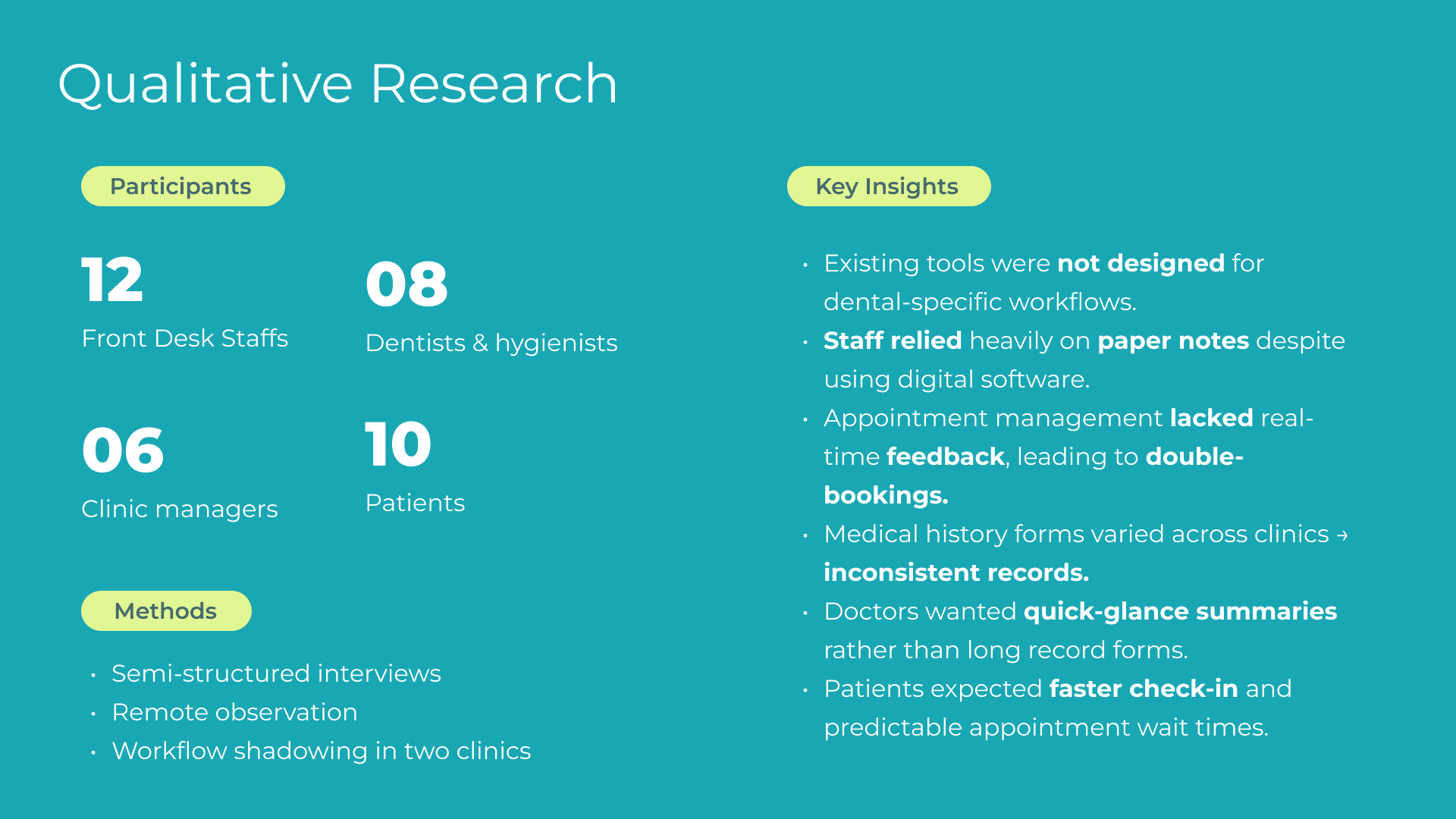
Over 26 interviews and 40+ hours of on-site observation, I consistently heard:
“I re-enter the same data three times.”
“I never know which room is free.”
“Patients fill the same forms every visit.”
“Everything takes more clicks than it should.”
These insights revealed a high-cognitive-load environment where staff were compensating for system shortcomings with post-it notes, notebooks, and ad-hoc verbal communication.
Quantitative Validation
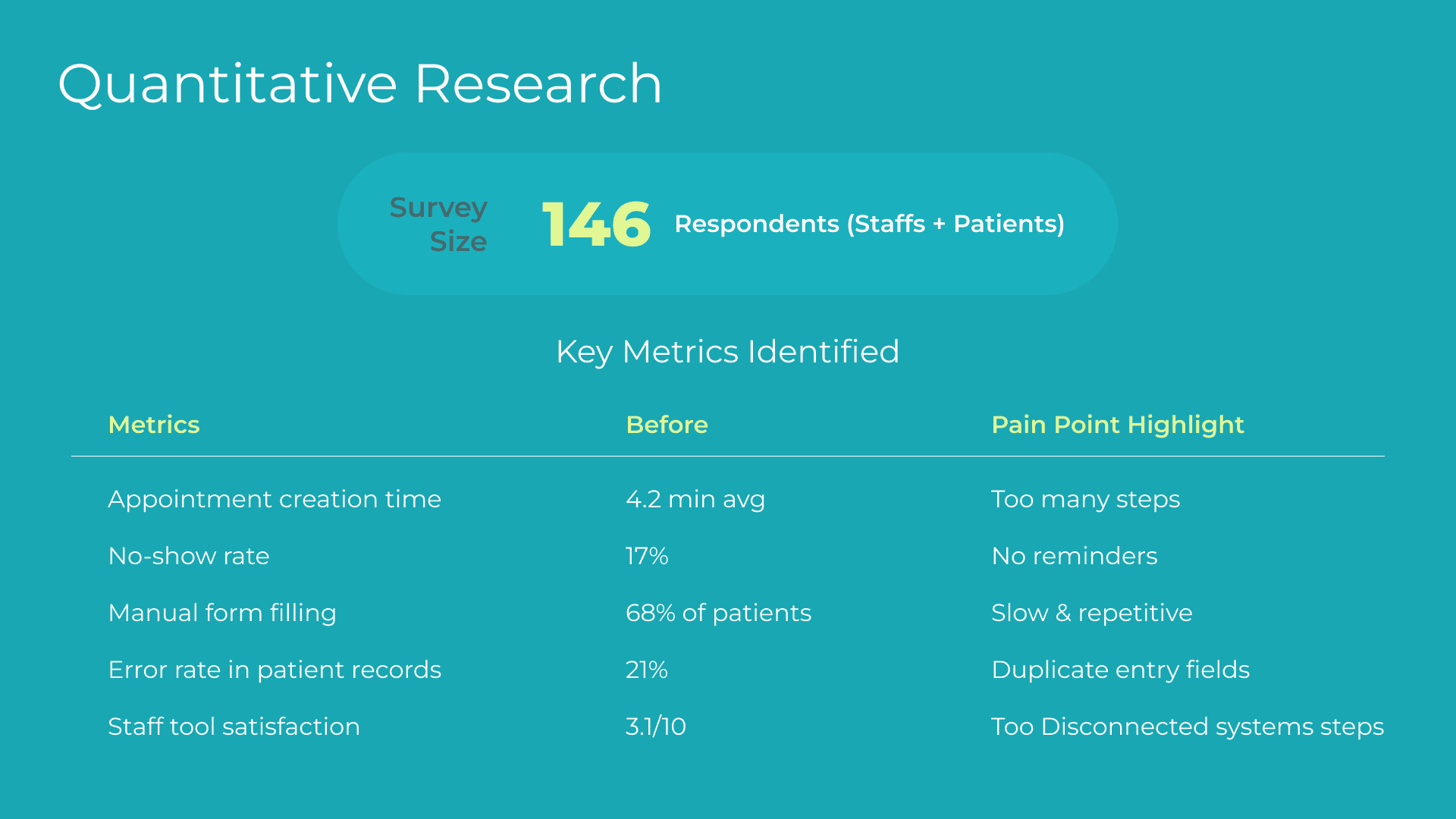
A survey of 146 clinic staff and patients confirmed:
68% of patients repeated information that clinics already had
Appointment creation took 4.2 minutes on average
Staff satisfaction with existing tools was 3.1/10
Record errors occurred in 21% of visits
No-show rates were 17% due to lack of reminders
The data validated the need for a radically more intuitive, unified system.
Problem Definition through 5W Analysis
Who
Clinic staff, dentists, hygienists, clinic admins, patients
What
Managing appointments, patient data, records, billing, workflows
Where
Front desk, dental rooms, multi-clinic networks, remote usage
When
Daily operations, patient visits, follow-ups, emergency scheduling
Why
Existing tools cause inefficiency, errors, and poor user experience
UX Problem Statements
Staff members need a unified tool that reduces duplication of work because fragmented systems increase errors and slow down workflows.
Dentists need quick access to patient history because searching across multiple systems wastes clinical time.
Patients need a smoother check-in process because long form-filling delays appointments.
Clinic managers need visibility into operations because unclear data impacts decision-making.
Using the research, I reframed the core challenges as actionable UX problem statements:
Front-desk staff need a faster, smarter appointment workflow to reduce errors and increase throughput.
Dentists need quick access to patient histories so they can focus on care, not navigation.
Patients need a smoother check-in and onboarding experience to reduce wait times.
Clinic managers need visibility into operations and performance to make informed decisions.
This clarity allowed the team to align around the real objective:
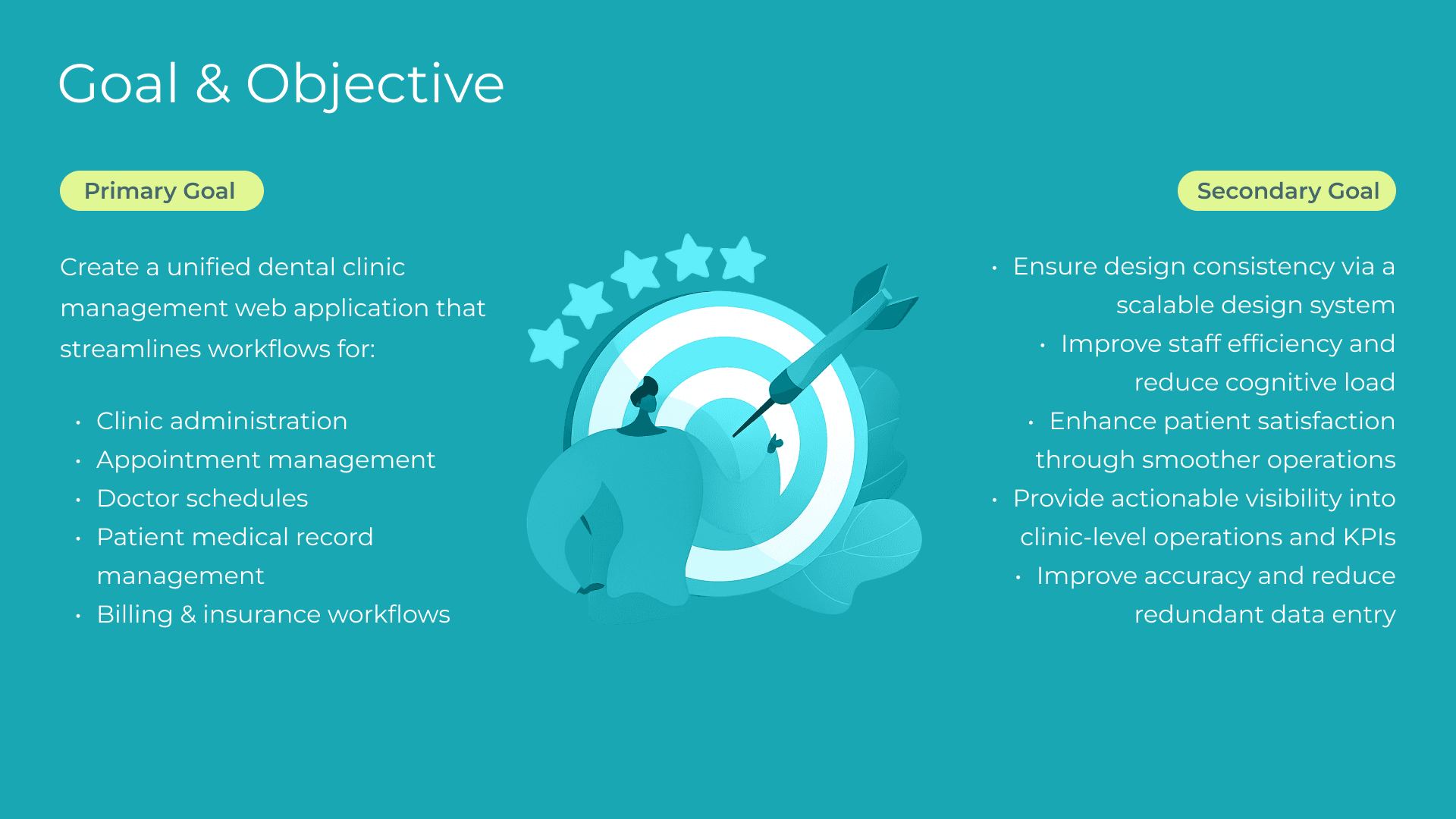
Design a unified, human-centered operating system for dental clinics.
Challenges Handled & Solution
Challenges Handled
Complex User Roles: Balanced the needs of admins, doctors, nurses, and patients with tailored interfaces and permissions.
Regulatory Compliance: Ensured all designs met US healthcare regulations for privacy and accessibility.
Legacy Integration: Designed solutions compatible with existing clinic management systems.
Scalability: Created a flexible design system to support future growth and new feature integration.
Solution
User Research & Journey Mapping: Conducted interviews and workshops with clinic staff, dentists, and patients to identify pain points and workflow gaps.
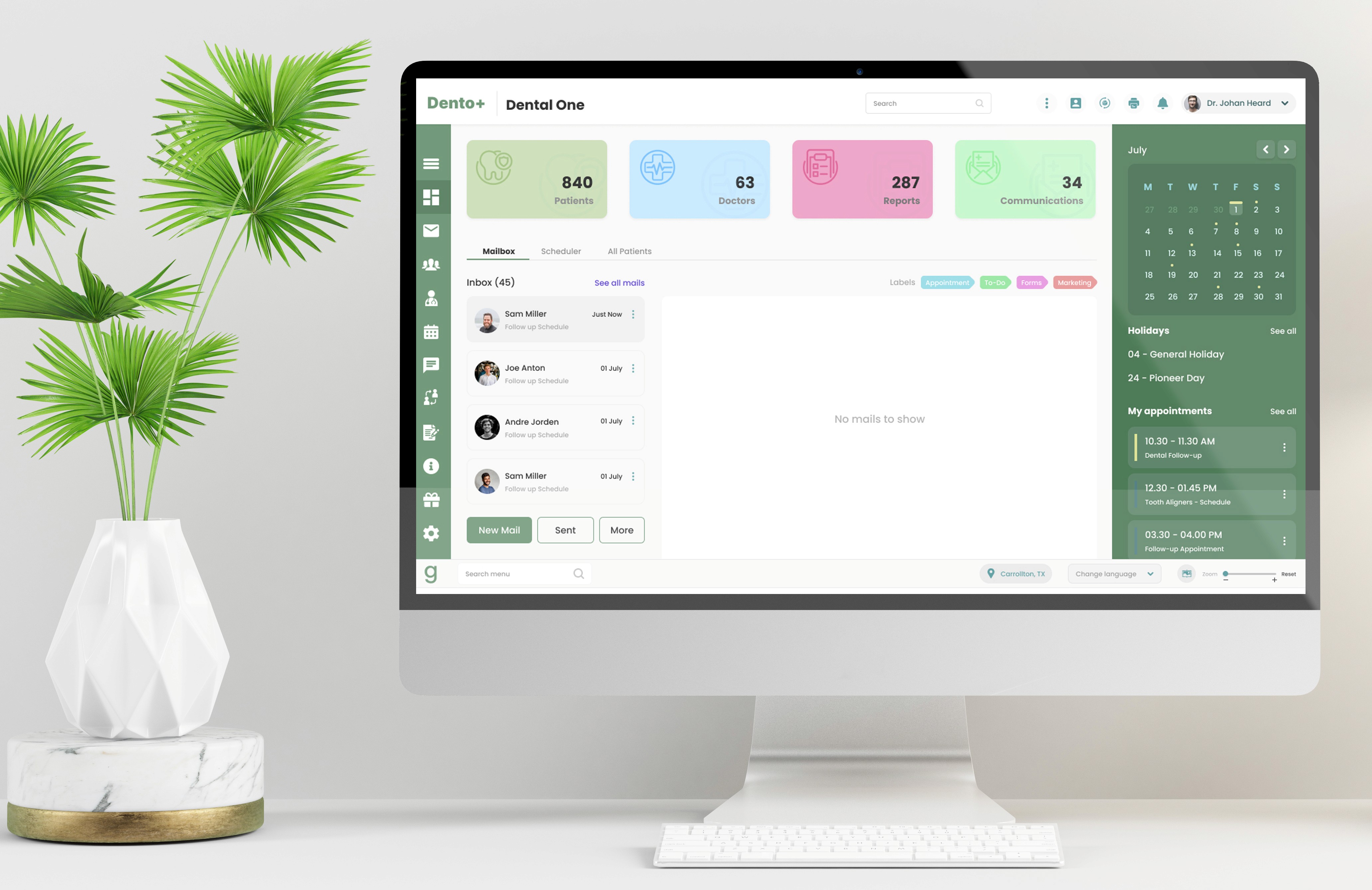
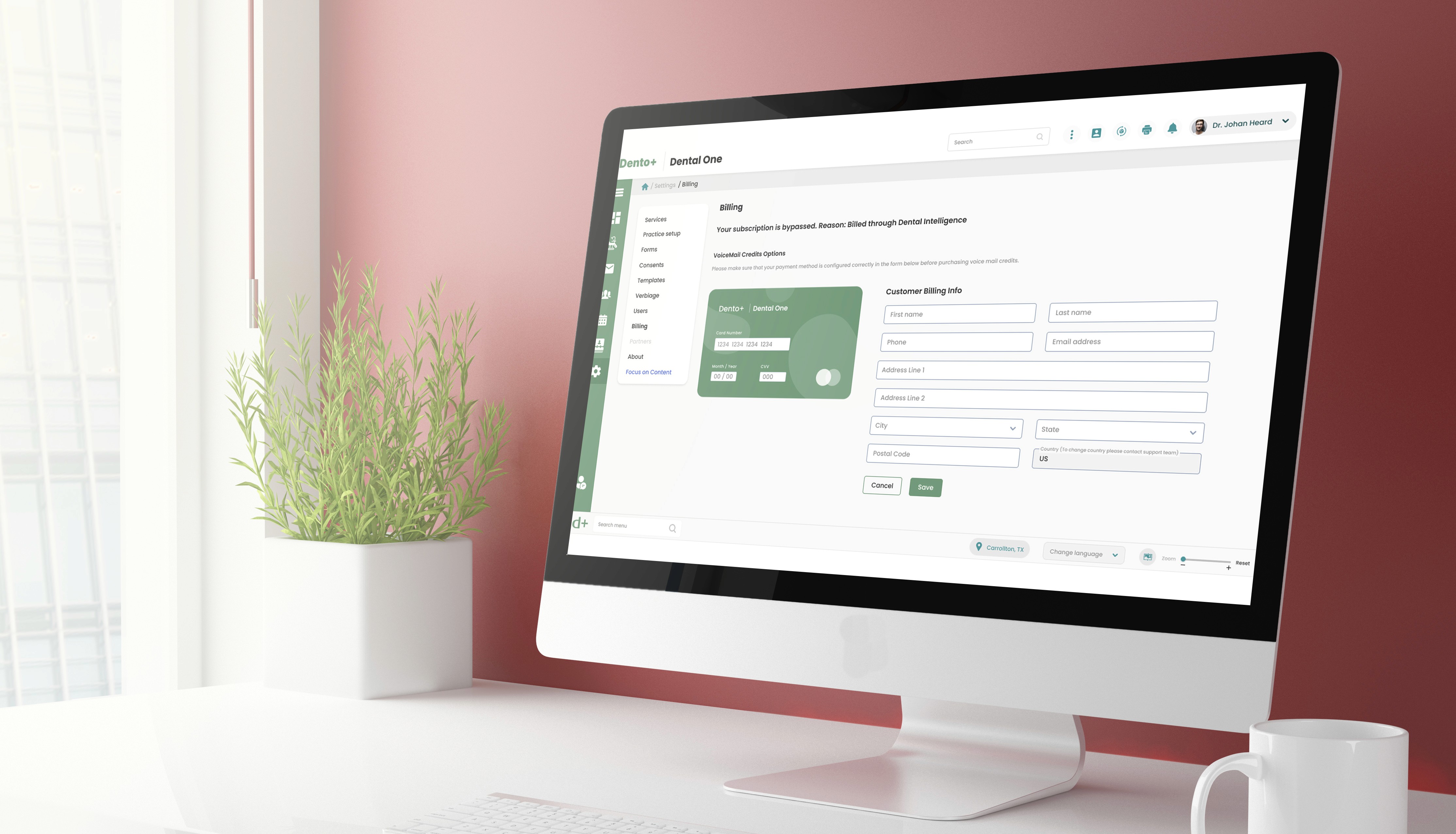
Unified Web Platform: Designed an intuitive dashboard for staff to manage appointments, patient details, billing, and doctor schedules.
Patient-Centric Features: Developed a seamless appointment booking flow, secure access to medical records, and automated reminders for patients.
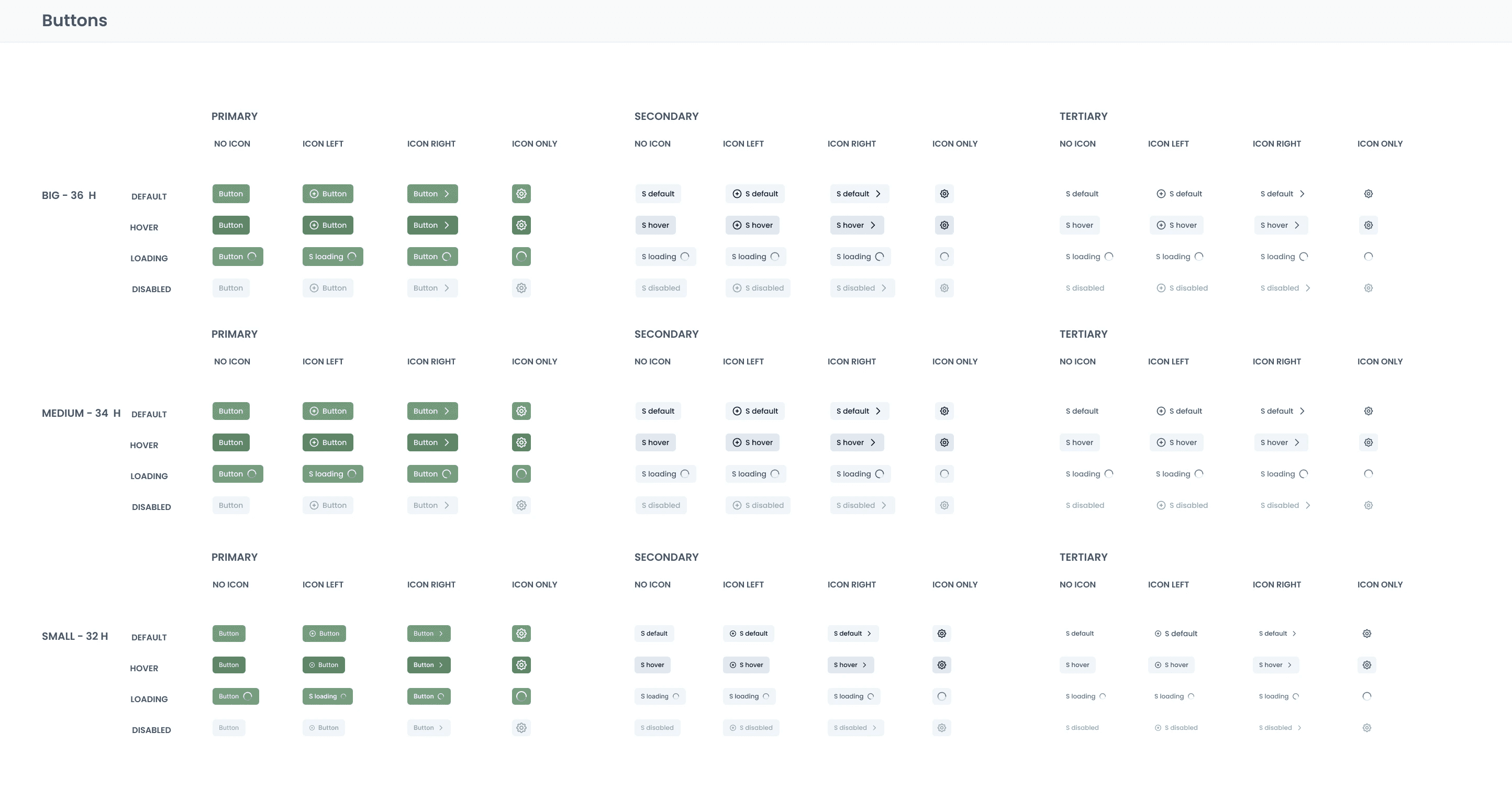
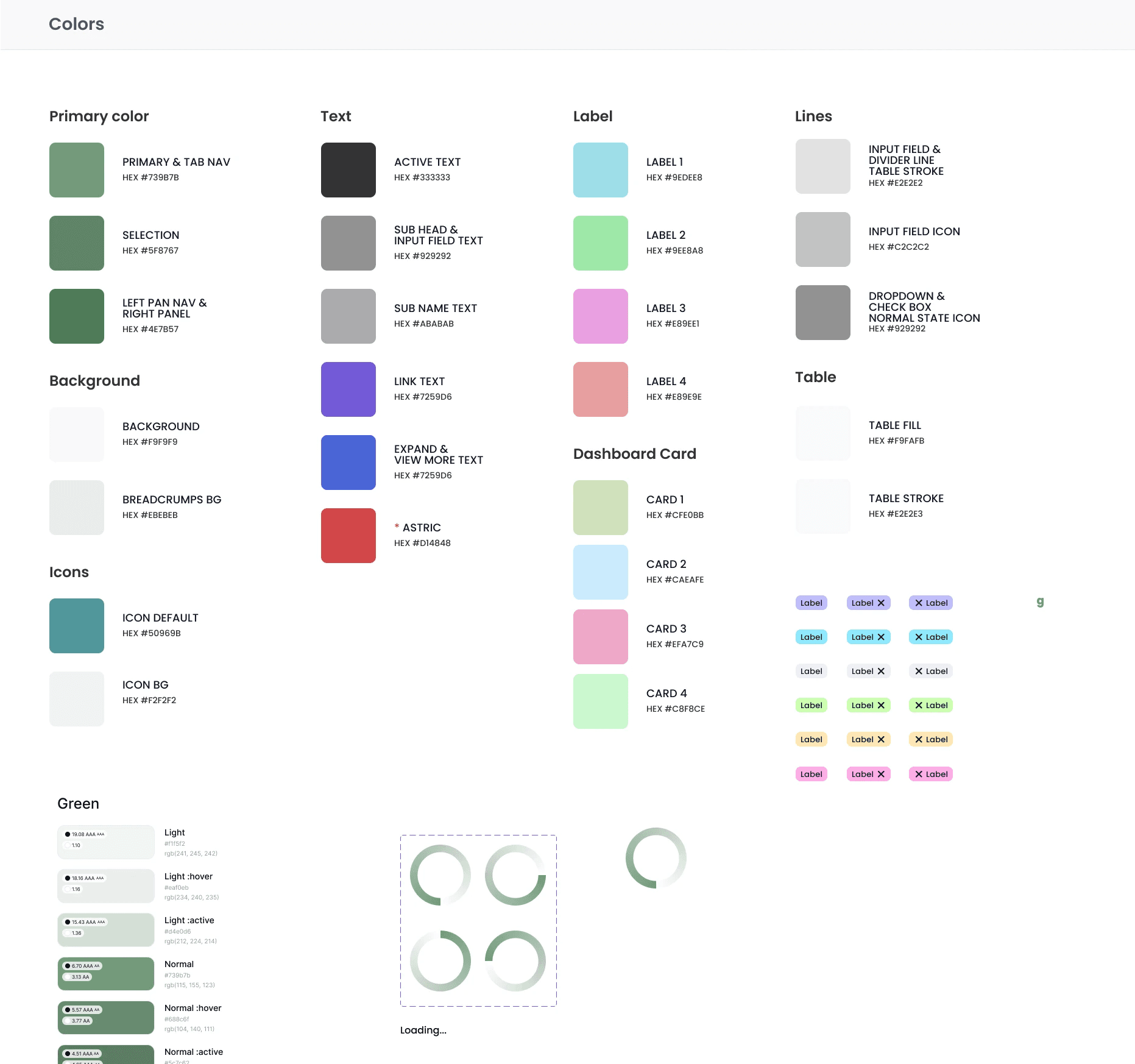
Design System Creation: Built a scalable design system with reusable components, clear guidelines, and accessibility standards (WCAG & HIPAA compliance).
Iterative Testing: Used prototypes and usability testing to refine workflows and interfaces for all user roles.
Summary :
Usability Testing & Validation
We tested the prototype with staff from three clinics. Results were powerful:
34% faster appointment creation
44% reduction in data-entry errors
61% improvement in staff satisfaction
26% faster patient check-in
Onboarding time for new staff reduced by half
Staff called the new system “intuitive,” “clean,” and “finally built for how clinics work.”
Impact
Within months of launch:
The network expanded usage from 3 clinics to 11 clinics
Dentists reported better efficiency and fewer documentation delays
Patients experienced shorter wait times
Managers gained real-time visibility into clinic performance
Most importantly, the system brought harmony and predictability to previously fragmented workflows.
Conclusion
The project delivered a modern, user-friendly dental clinic management platform that improved operational efficiency, reduced administrative workload, and enhanced the patient experience. The robust design system ensures ongoing consistency and supports the client’s expanding network of clinics.
More Projects

New release
Preview
Product Design
Dental Clinic Management - Web Portal
Designed a comprehensive web application for a network of dental clinics across the US, streamlining hospital management, doctor appointments, patient records, and medical data. The project included the creation and management of a robust design system to ensure consistency, accessibility, and scalability.
Year :
2023
Industry :
Healthcare
Client :
US Based Healthcare Client
Project Duration :
26 weeks
Problem Statement :
Dental clinics were struggling with fragmented digital tools, leading to inefficient appointment scheduling, cumbersome patient record management, and inconsistent user experiences for both staff and patients. These issues resulted in administrative bottlenecks, increased errors, and reduced patient satisfaction.
Research
Qualitative Insights
Over 26 interviews and 40+ hours of on-site observation, I consistently heard:
“I re-enter the same data three times.”
“I never know which room is free.”
“Patients fill the same forms every visit.”
“Everything takes more clicks than it should.”
These insights revealed a high-cognitive-load environment where staff were compensating for system shortcomings with post-it notes, notebooks, and ad-hoc verbal communication.
Quantitative Validation
A survey of 146 clinic staff and patients confirmed:
68% of patients repeated information that clinics already had
Appointment creation took 4.2 minutes on average
Staff satisfaction with existing tools was 3.1/10
Record errors occurred in 21% of visits
No-show rates were 17% due to lack of reminders
The data validated the need for a radically more intuitive, unified system.
Problem Definition through 5W Analysis
Who
Clinic staff, dentists, hygienists, clinic admins, patients
What
Managing appointments, patient data, records, billing, workflows
Where
Front desk, dental rooms, multi-clinic networks, remote usage
When
Daily operations, patient visits, follow-ups, emergency scheduling
Why
Existing tools cause inefficiency, errors, and poor user experience
UX Problem Statements
Staff members need a unified tool that reduces duplication of work because fragmented systems increase errors and slow down workflows.
Dentists need quick access to patient history because searching across multiple systems wastes clinical time.
Patients need a smoother check-in process because long form-filling delays appointments.
Clinic managers need visibility into operations because unclear data impacts decision-making.
Using the research, I reframed the core challenges as actionable UX problem statements:
Front-desk staff need a faster, smarter appointment workflow to reduce errors and increase throughput.
Dentists need quick access to patient histories so they can focus on care, not navigation.
Patients need a smoother check-in and onboarding experience to reduce wait times.
Clinic managers need visibility into operations and performance to make informed decisions.
This clarity allowed the team to align around the real objective:
Design a unified, human-centered operating system for dental clinics.
Challenges Handled & Solution
Challenges Handled
Complex User Roles: Balanced the needs of admins, doctors, nurses, and patients with tailored interfaces and permissions.
Regulatory Compliance: Ensured all designs met US healthcare regulations for privacy and accessibility.
Legacy Integration: Designed solutions compatible with existing clinic management systems.
Scalability: Created a flexible design system to support future growth and new feature integration.
Solution
User Research & Journey Mapping: Conducted interviews and workshops with clinic staff, dentists, and patients to identify pain points and workflow gaps.
Unified Web Platform: Designed an intuitive dashboard for staff to manage appointments, patient details, billing, and doctor schedules.
Patient-Centric Features: Developed a seamless appointment booking flow, secure access to medical records, and automated reminders for patients.
Design System Creation: Built a scalable design system with reusable components, clear guidelines, and accessibility standards (WCAG & HIPAA compliance).
Iterative Testing: Used prototypes and usability testing to refine workflows and interfaces for all user roles.
Summary :
Usability Testing & Validation
We tested the prototype with staff from three clinics. Results were powerful:
34% faster appointment creation
44% reduction in data-entry errors
61% improvement in staff satisfaction
26% faster patient check-in
Onboarding time for new staff reduced by half
Staff called the new system “intuitive,” “clean,” and “finally built for how clinics work.”
Impact
Within months of launch:
The network expanded usage from 3 clinics to 11 clinics
Dentists reported better efficiency and fewer documentation delays
Patients experienced shorter wait times
Managers gained real-time visibility into clinic performance
Most importantly, the system brought harmony and predictability to previously fragmented workflows.
Conclusion
The project delivered a modern, user-friendly dental clinic management platform that improved operational efficiency, reduced administrative workload, and enhanced the patient experience. The robust design system ensures ongoing consistency and supports the client’s expanding network of clinics.
More Projects
New release
Preview
Product Design
Dental Clinic Management - Web Portal
Designed a comprehensive web application for a network of dental clinics across the US, streamlining hospital management, doctor appointments, patient records, and medical data. The project included the creation and management of a robust design system to ensure consistency, accessibility, and scalability.
Year :
2023
Industry :
Healthcare
Client :
US Based Healthcare Client
Project Duration :
26 weeks
Problem Statement :
Dental clinics were struggling with fragmented digital tools, leading to inefficient appointment scheduling, cumbersome patient record management, and inconsistent user experiences for both staff and patients. These issues resulted in administrative bottlenecks, increased errors, and reduced patient satisfaction.
Research
Qualitative Insights
Over 26 interviews and 40+ hours of on-site observation, I consistently heard:
“I re-enter the same data three times.”
“I never know which room is free.”
“Patients fill the same forms every visit.”
“Everything takes more clicks than it should.”
These insights revealed a high-cognitive-load environment where staff were compensating for system shortcomings with post-it notes, notebooks, and ad-hoc verbal communication.
Quantitative Validation
A survey of 146 clinic staff and patients confirmed:
68% of patients repeated information that clinics already had
Appointment creation took 4.2 minutes on average
Staff satisfaction with existing tools was 3.1/10
Record errors occurred in 21% of visits
No-show rates were 17% due to lack of reminders
The data validated the need for a radically more intuitive, unified system.
Problem Definition through 5W Analysis
Who
Clinic staff, dentists, hygienists, clinic admins, patients
What
Managing appointments, patient data, records, billing, workflows
Where
Front desk, dental rooms, multi-clinic networks, remote usage
When
Daily operations, patient visits, follow-ups, emergency scheduling
Why
Existing tools cause inefficiency, errors, and poor user experience
UX Problem Statements
Staff members need a unified tool that reduces duplication of work because fragmented systems increase errors and slow down workflows.
Dentists need quick access to patient history because searching across multiple systems wastes clinical time.
Patients need a smoother check-in process because long form-filling delays appointments.
Clinic managers need visibility into operations because unclear data impacts decision-making.
Using the research, I reframed the core challenges as actionable UX problem statements:
Front-desk staff need a faster, smarter appointment workflow to reduce errors and increase throughput.
Dentists need quick access to patient histories so they can focus on care, not navigation.
Patients need a smoother check-in and onboarding experience to reduce wait times.
Clinic managers need visibility into operations and performance to make informed decisions.
This clarity allowed the team to align around the real objective:
Design a unified, human-centered operating system for dental clinics.
Challenges Handled & Solution
Challenges Handled
Complex User Roles: Balanced the needs of admins, doctors, nurses, and patients with tailored interfaces and permissions.
Regulatory Compliance: Ensured all designs met US healthcare regulations for privacy and accessibility.
Legacy Integration: Designed solutions compatible with existing clinic management systems.
Scalability: Created a flexible design system to support future growth and new feature integration.
Solution
User Research & Journey Mapping: Conducted interviews and workshops with clinic staff, dentists, and patients to identify pain points and workflow gaps.
Unified Web Platform: Designed an intuitive dashboard for staff to manage appointments, patient details, billing, and doctor schedules.
Patient-Centric Features: Developed a seamless appointment booking flow, secure access to medical records, and automated reminders for patients.
Design System Creation: Built a scalable design system with reusable components, clear guidelines, and accessibility standards (WCAG & HIPAA compliance).
Iterative Testing: Used prototypes and usability testing to refine workflows and interfaces for all user roles.
Summary :
Usability Testing & Validation
We tested the prototype with staff from three clinics. Results were powerful:
34% faster appointment creation
44% reduction in data-entry errors
61% improvement in staff satisfaction
26% faster patient check-in
Onboarding time for new staff reduced by half
Staff called the new system “intuitive,” “clean,” and “finally built for how clinics work.”
Impact
Within months of launch:
The network expanded usage from 3 clinics to 11 clinics
Dentists reported better efficiency and fewer documentation delays
Patients experienced shorter wait times
Managers gained real-time visibility into clinic performance
Most importantly, the system brought harmony and predictability to previously fragmented workflows.
Conclusion
The project delivered a modern, user-friendly dental clinic management platform that improved operational efficiency, reduced administrative workload, and enhanced the patient experience. The robust design system ensures ongoing consistency and supports the client’s expanding network of clinics.
More Projects
New release
Preview