Product Design
Foodoo - Smart Meal Planner - UX Case Study
A flexible, personalized meal-planning ecosystem that reduces mental load and simplifies the path from deciding → buying → cooking.
Year :
2024
Industry :
Food & Hospitality
Client :
Anonymous
Project Duration :
36 Weeks

Project Overview
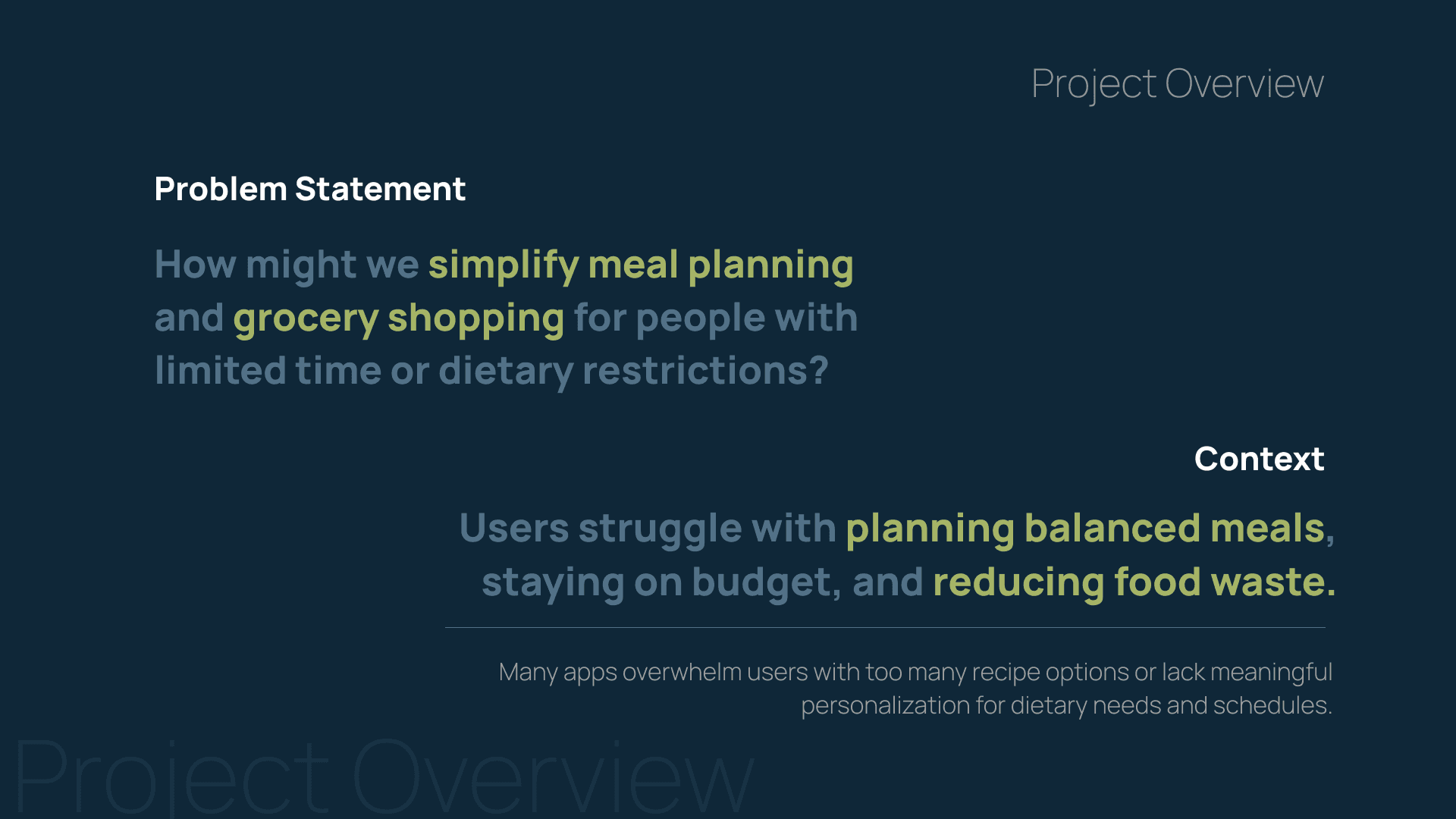
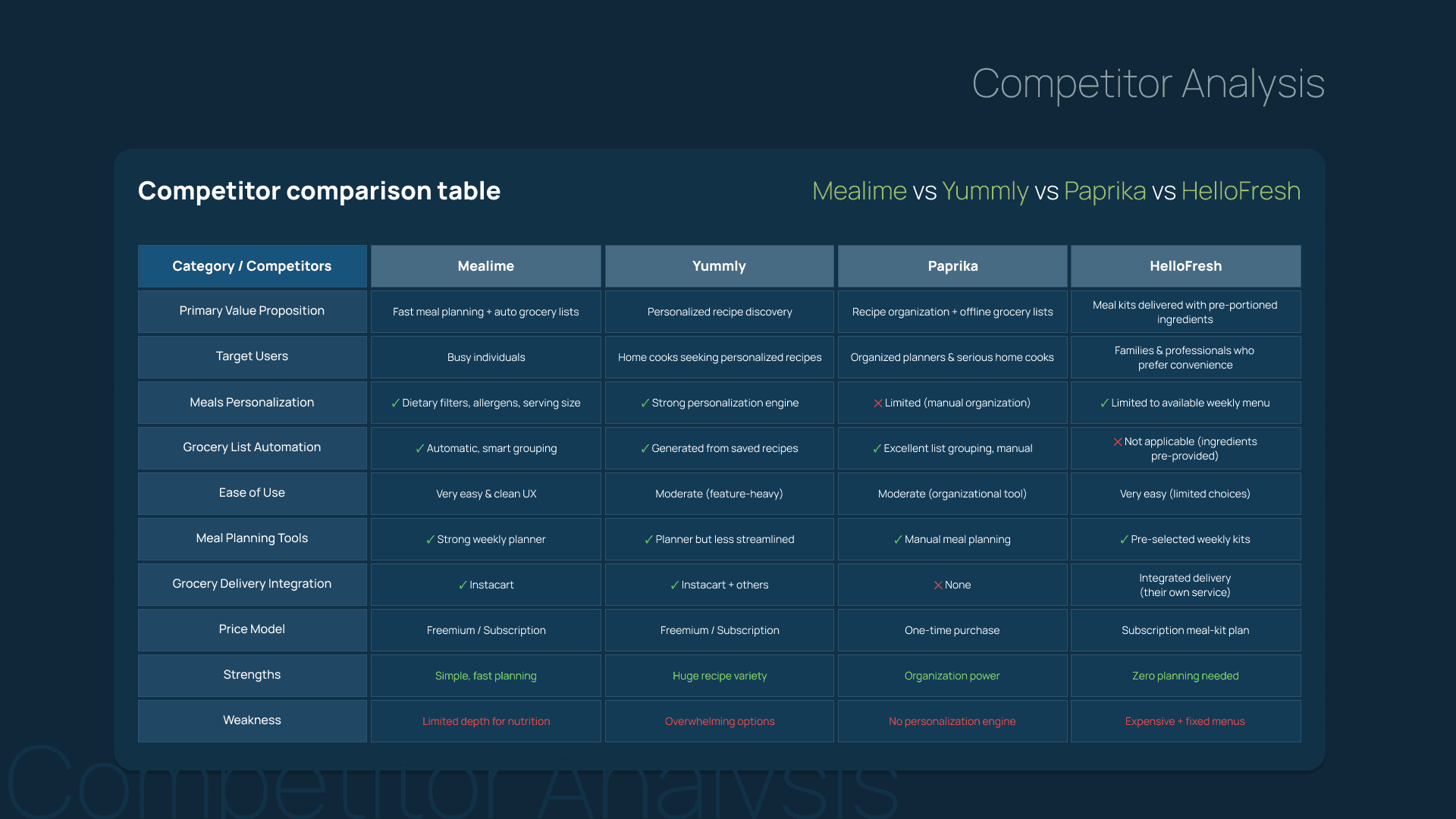
Meal planning is a deceptively complex weekly ritual. Through interviews and surveys, I learned that users grapple with decision fatigue, dietary restrictions, unpredictable schedules, and food waste. Existing apps offer recipes and lists, but none connect planning, pantry management, and grocery shopping into a coherent workflow.
My goal was to design a flexible, personalized meal-planning ecosystem that reduces mental load and simplifies the path from deciding → buying → cooking.

Discovery & Key Insight
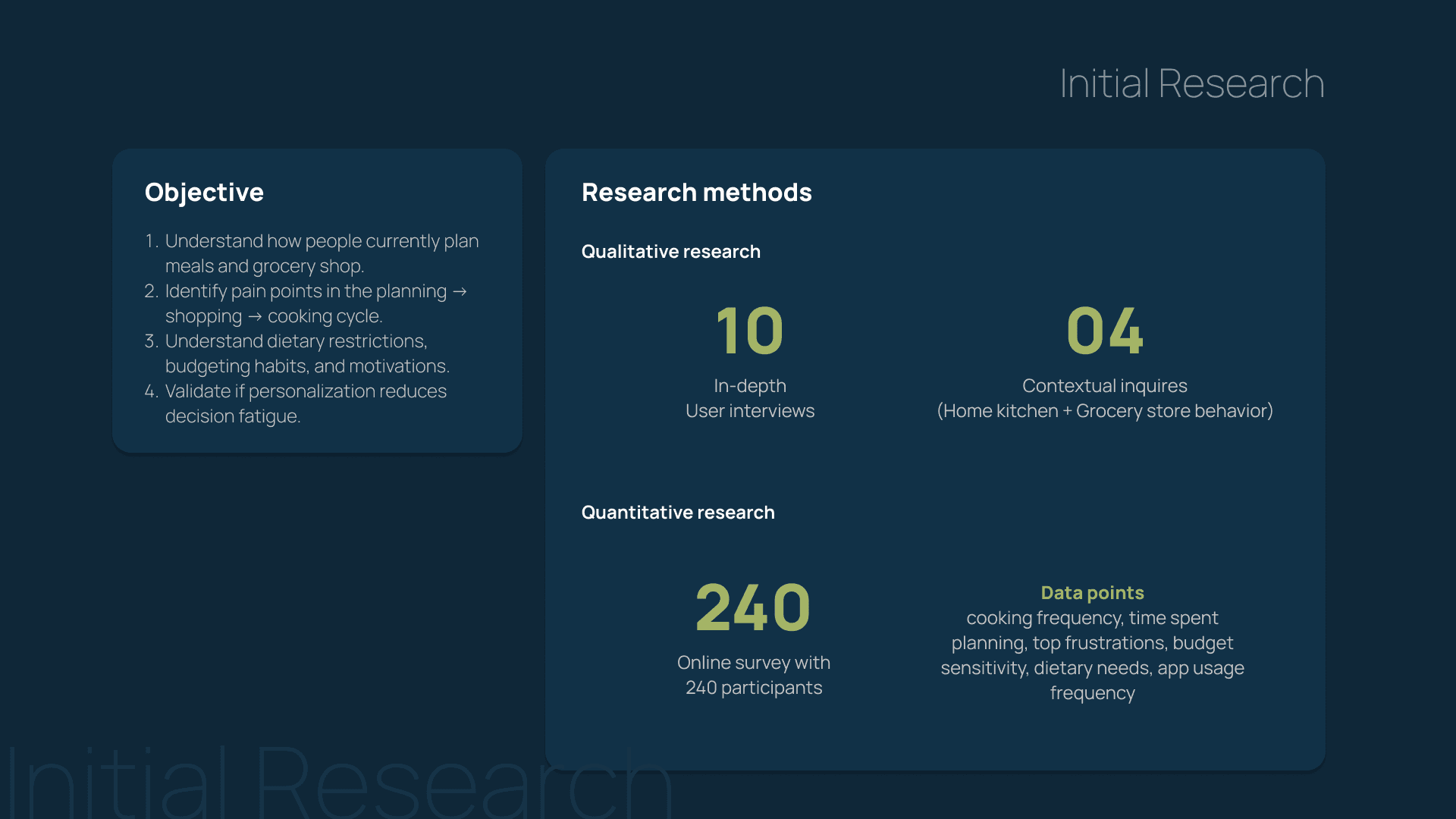
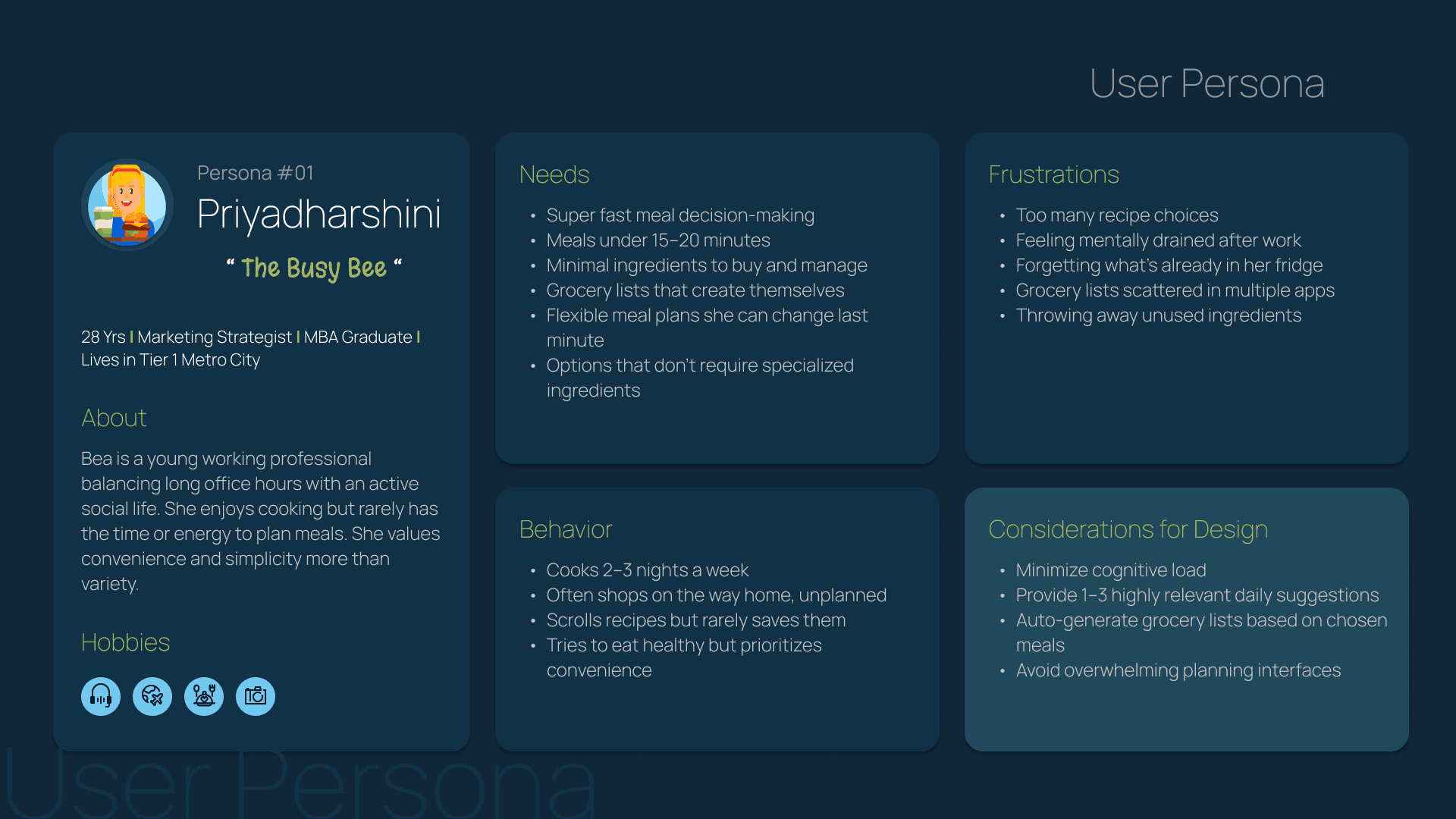
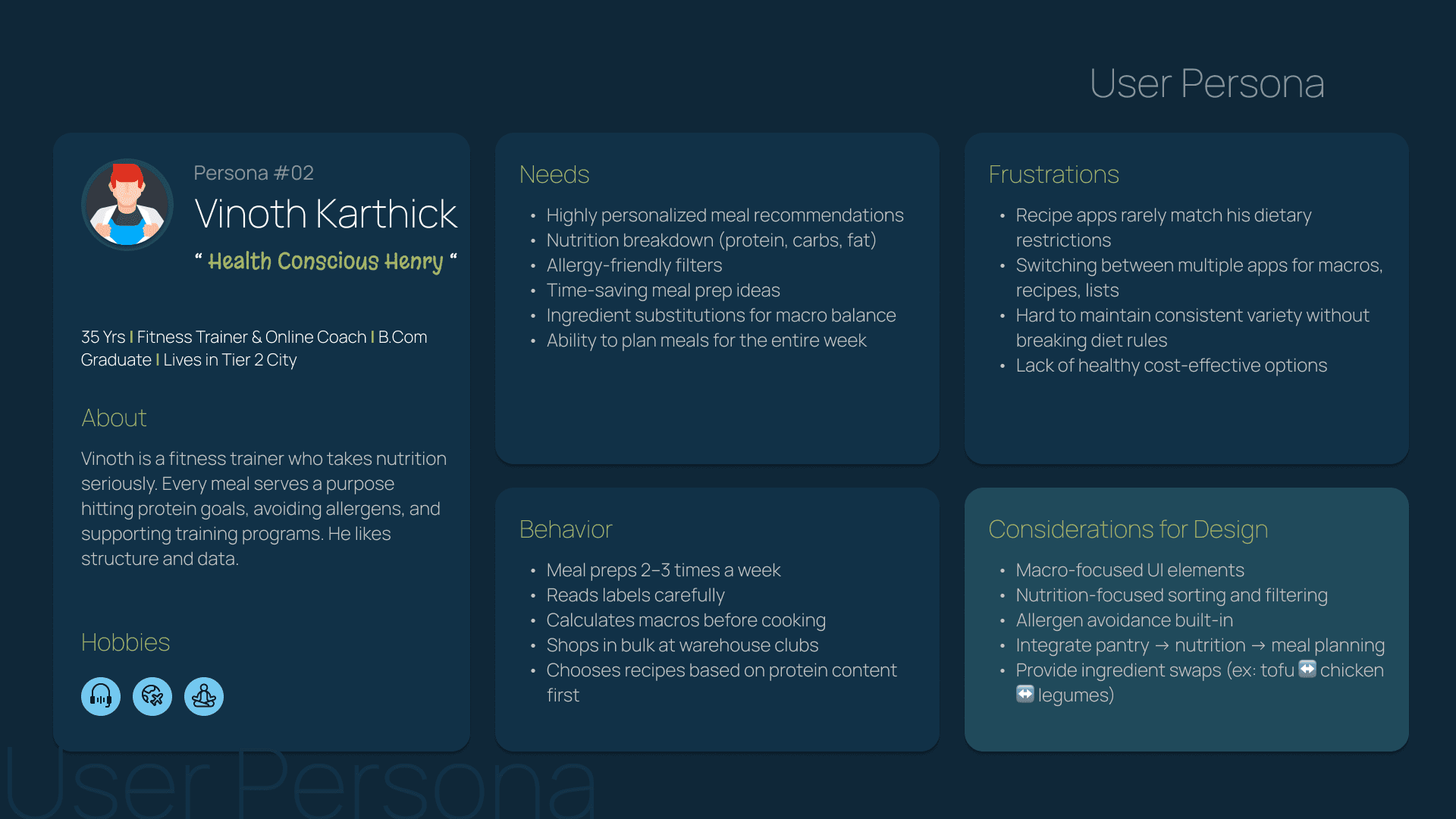
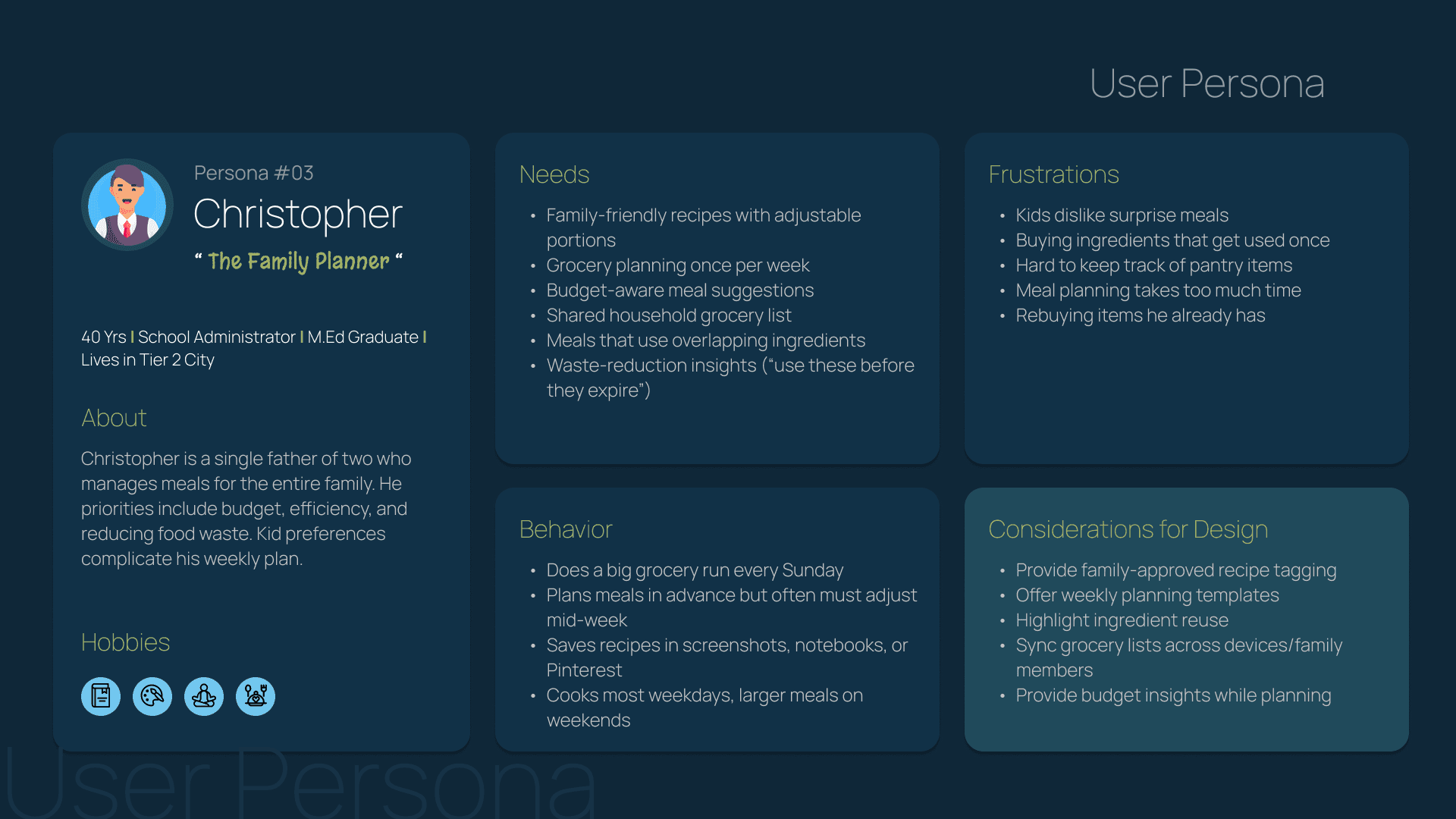
To understand the real pain points, I conducted 10 interviews, 4 contextual inquiries, and a 240-user survey. I observed meal-prep habits in home kitchens and shadowed users on grocery trips.
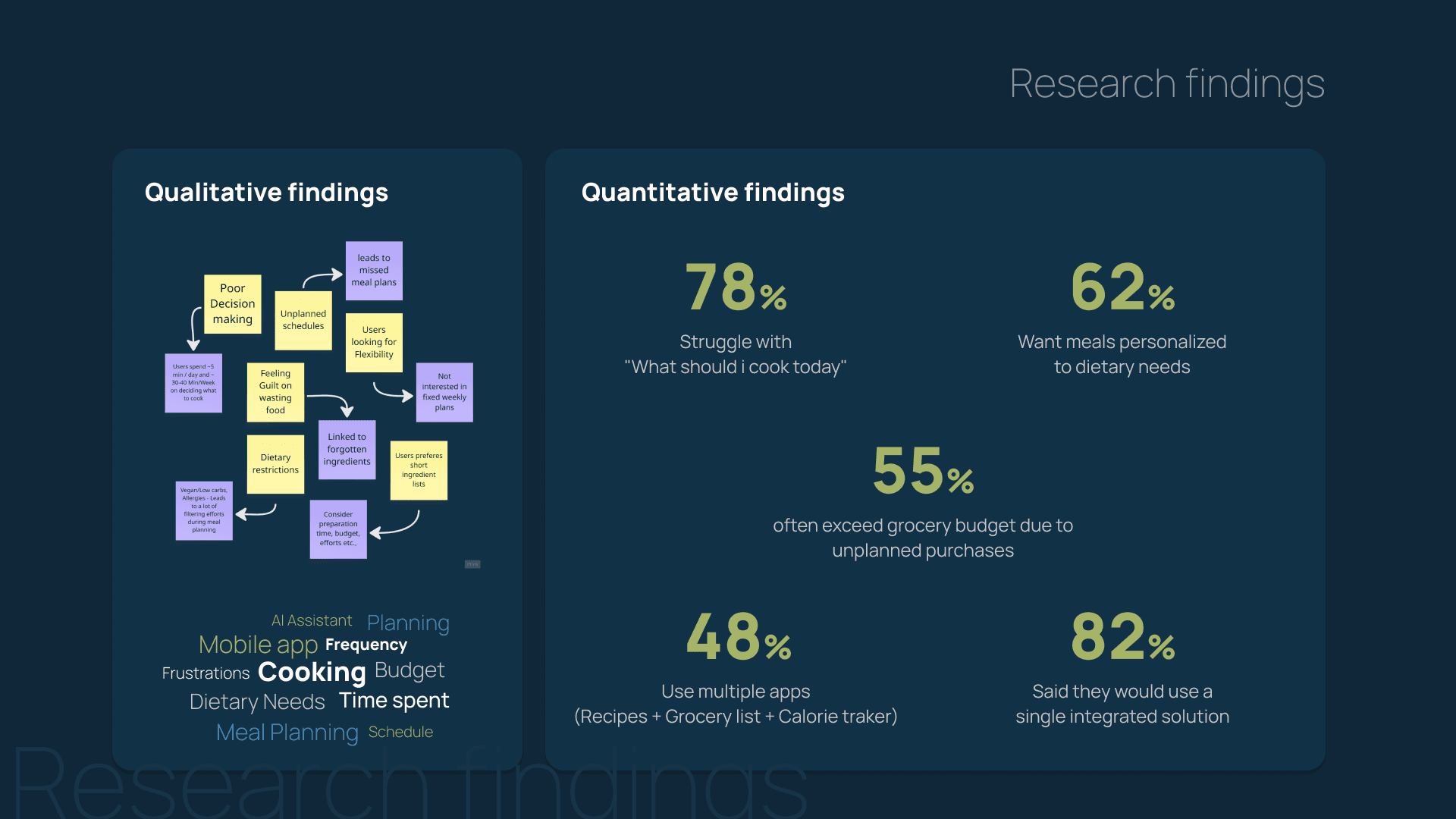
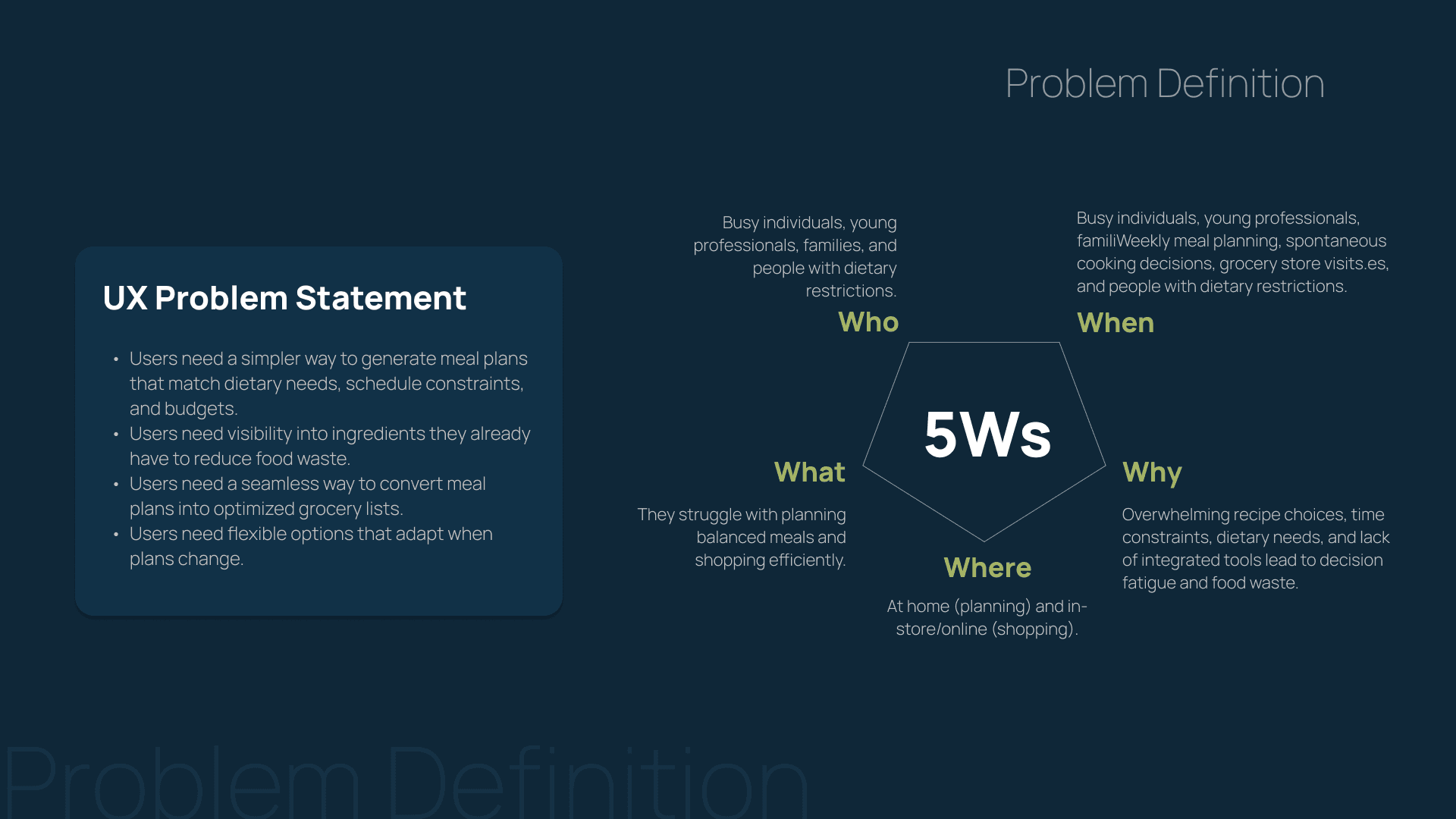
Users consistently described the mental load of decision-making as more painful than cooking itself. Many abandoned weekly plans because life rarely follows a schedule. And almost everyone admitted to throwing out food weekly—often forgotten ingredients lost in the fridge.
The core issue isn’t recipes.
It’s the broken workflow between meals, groceries, and pantry state.
Users needed one system that adjusts to their realities: busy weekdays, dietary needs, budget constraints, unexpected changes, and food they already have.
Design Strategy & Solution
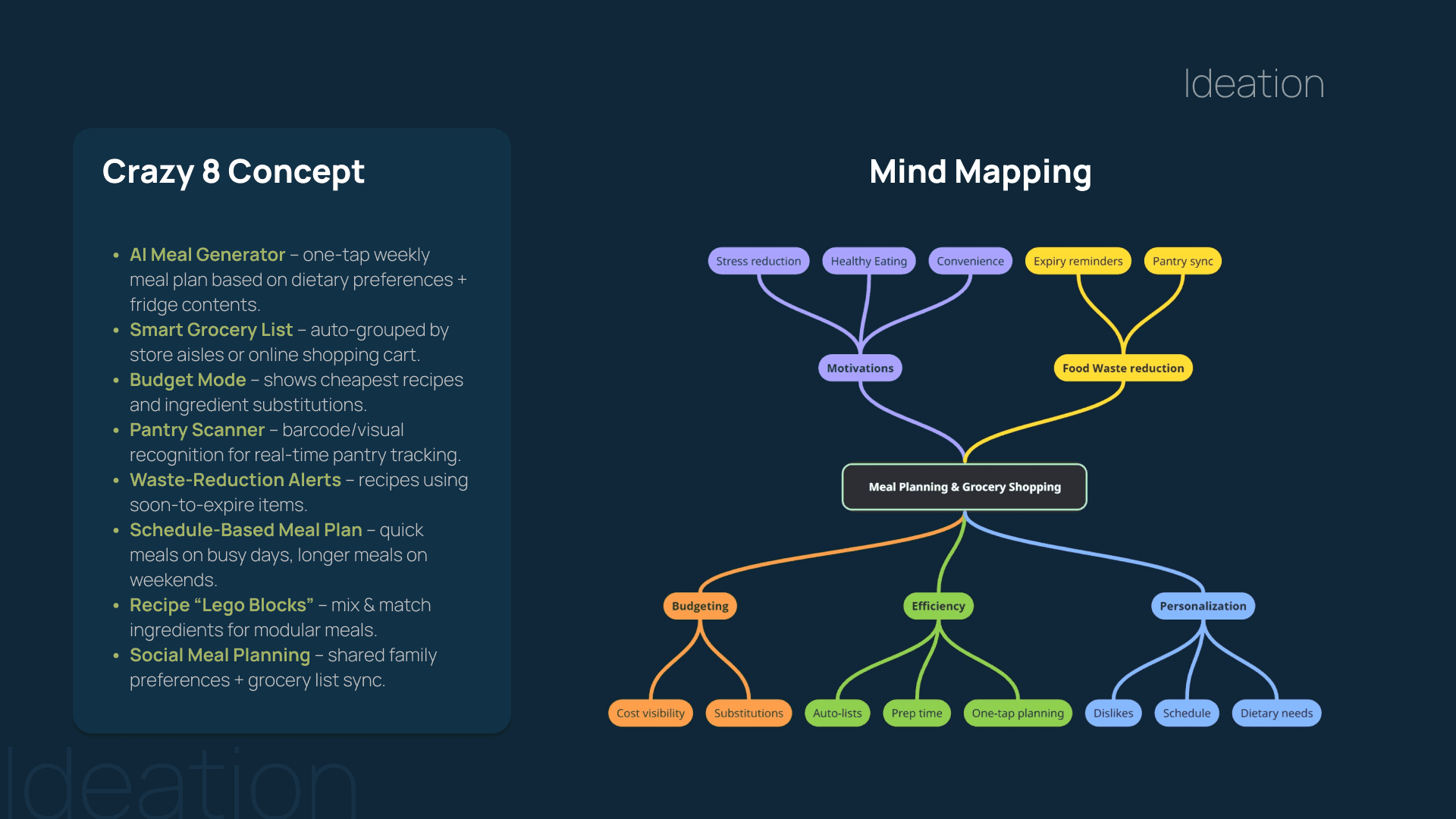
I reframed the solution around three pillars:
Personalization that reduces decisions Diet, goals, allergies, preferred cuisines, schedule constraints.
Flexibility that adapts to real-life changes Swap meals instantly, shift days, accommodate new schedules.
Integration that prevents waste and overspending Smart grocery lists, pantry-aware suggestions, expiry prompts.
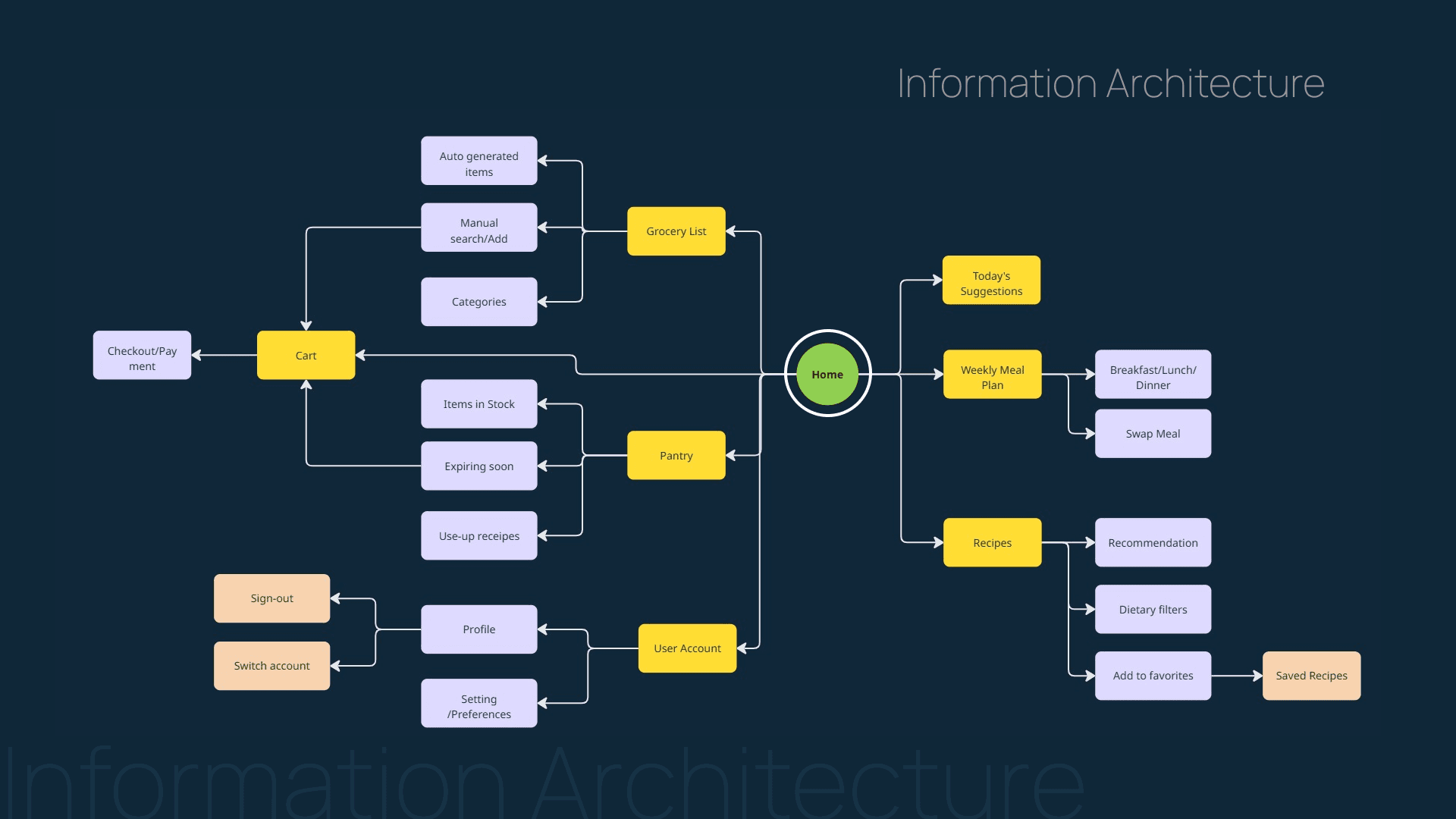
I designed a hybrid planning system combining:
A one-tap personalized weekly meal planner
Daily flexible suggestions for unplanned days
A smart grocery list automatically linked to recipes
A pantry tracker that enables waste-reducing recommendations
Budget mode for low-cost meal planning
The experience feels guided and supportive—never overwhelming.
Outcome
The final system reduces weekly meal-planning time from ~30 minutes to under 5.
Users stay within budget more easily, waste less food, and stick to meal plans longer because the system adapts when life changes.
This project demonstrates how design can turn an everyday burden into a lightweight, personalized workflow that genuinely improves users’ lives.
—- Visual Design & Design System will be posted later —
More Projects

New release
Preview
Product Design
Foodoo - Smart Meal Planner - UX Case Study
A flexible, personalized meal-planning ecosystem that reduces mental load and simplifies the path from deciding → buying → cooking.
Year :
2024
Industry :
Food & Hospitality
Client :
Anonymous
Project Duration :
36 Weeks
Project Overview
Meal planning is a deceptively complex weekly ritual. Through interviews and surveys, I learned that users grapple with decision fatigue, dietary restrictions, unpredictable schedules, and food waste. Existing apps offer recipes and lists, but none connect planning, pantry management, and grocery shopping into a coherent workflow.
My goal was to design a flexible, personalized meal-planning ecosystem that reduces mental load and simplifies the path from deciding → buying → cooking.
Discovery & Key Insight
To understand the real pain points, I conducted 10 interviews, 4 contextual inquiries, and a 240-user survey. I observed meal-prep habits in home kitchens and shadowed users on grocery trips.
Users consistently described the mental load of decision-making as more painful than cooking itself. Many abandoned weekly plans because life rarely follows a schedule. And almost everyone admitted to throwing out food weekly—often forgotten ingredients lost in the fridge.
The core issue isn’t recipes.
It’s the broken workflow between meals, groceries, and pantry state.
Users needed one system that adjusts to their realities: busy weekdays, dietary needs, budget constraints, unexpected changes, and food they already have.
Design Strategy & Solution
I reframed the solution around three pillars:
Personalization that reduces decisions Diet, goals, allergies, preferred cuisines, schedule constraints.
Flexibility that adapts to real-life changes Swap meals instantly, shift days, accommodate new schedules.
Integration that prevents waste and overspending Smart grocery lists, pantry-aware suggestions, expiry prompts.
I designed a hybrid planning system combining:
A one-tap personalized weekly meal planner
Daily flexible suggestions for unplanned days
A smart grocery list automatically linked to recipes
A pantry tracker that enables waste-reducing recommendations
Budget mode for low-cost meal planning
The experience feels guided and supportive—never overwhelming.
Outcome
The final system reduces weekly meal-planning time from ~30 minutes to under 5.
Users stay within budget more easily, waste less food, and stick to meal plans longer because the system adapts when life changes.
This project demonstrates how design can turn an everyday burden into a lightweight, personalized workflow that genuinely improves users’ lives.
—- Visual Design & Design System will be posted later —
More Projects
New release
Preview
Product Design
Foodoo - Smart Meal Planner - UX Case Study
A flexible, personalized meal-planning ecosystem that reduces mental load and simplifies the path from deciding → buying → cooking.
Year :
2024
Industry :
Food & Hospitality
Client :
Anonymous
Project Duration :
36 Weeks
Project Overview
Meal planning is a deceptively complex weekly ritual. Through interviews and surveys, I learned that users grapple with decision fatigue, dietary restrictions, unpredictable schedules, and food waste. Existing apps offer recipes and lists, but none connect planning, pantry management, and grocery shopping into a coherent workflow.
My goal was to design a flexible, personalized meal-planning ecosystem that reduces mental load and simplifies the path from deciding → buying → cooking.
Discovery & Key Insight
To understand the real pain points, I conducted 10 interviews, 4 contextual inquiries, and a 240-user survey. I observed meal-prep habits in home kitchens and shadowed users on grocery trips.
Users consistently described the mental load of decision-making as more painful than cooking itself. Many abandoned weekly plans because life rarely follows a schedule. And almost everyone admitted to throwing out food weekly—often forgotten ingredients lost in the fridge.
The core issue isn’t recipes.
It’s the broken workflow between meals, groceries, and pantry state.
Users needed one system that adjusts to their realities: busy weekdays, dietary needs, budget constraints, unexpected changes, and food they already have.
Design Strategy & Solution
I reframed the solution around three pillars:
Personalization that reduces decisions Diet, goals, allergies, preferred cuisines, schedule constraints.
Flexibility that adapts to real-life changes Swap meals instantly, shift days, accommodate new schedules.
Integration that prevents waste and overspending Smart grocery lists, pantry-aware suggestions, expiry prompts.
I designed a hybrid planning system combining:
A one-tap personalized weekly meal planner
Daily flexible suggestions for unplanned days
A smart grocery list automatically linked to recipes
A pantry tracker that enables waste-reducing recommendations
Budget mode for low-cost meal planning
The experience feels guided and supportive—never overwhelming.
Outcome
The final system reduces weekly meal-planning time from ~30 minutes to under 5.
Users stay within budget more easily, waste less food, and stick to meal plans longer because the system adapts when life changes.
This project demonstrates how design can turn an everyday burden into a lightweight, personalized workflow that genuinely improves users’ lives.
—- Visual Design & Design System will be posted later —
More Projects
New release
Preview